Hi, I normally like to read historical articles and do some research about them. This specific Article got my attention and I really liked it because It's a good resume of what I was taught in Mexico about the great city of Tenochtitlan and how it was destroyed by the Spanish conquerors. After reading the full article I realized that I didn't like all the adds and also was thinking that the article might be lost I decided to put the full article on my blog so anybody that it's curious about the history of the ancient Aztec city will be able to read it without any interruption or adds. Well at the end I am making reference to the author and the original link to avoid having any kind of problems in the future so I hope you like it as I did, so here it is :)
Tenochtitlan, the city that Rivaled with Venice
 |
| A trading area at the confluence of a bridge and a canal. Pinterest |
“Even we who have seen these things with our own eyes, are yet so amazed as to be unable to comprehend their reality” Cortes in a letter to King Charles V. He was so overwhelmed by the grandeur of the great Aztec city that he was not sure how to best describe it to the king. He further says: “To convey to your Majesty a just conception of the great extent of this noble city of Tenochtitlan… would require the labor of many accomplished writers, and much time for the completion of the task.”
Mexico City, which exists on the ruins of Tenochtitlan is certainly an impressive city. It’s one of the 25 largest cities in the world and is the oldest capital city in the Americas, but it has little of the spectacle of its predecessor (no offense to those in Mexico).
Great cities of the Renaissance usually had one or two things to make them stand out; the canal streets of Venice, the impressive buildings of Istanbul, the history of Rome, but Tenochtitlan was unique and impressive in almost every way it possibly could be. It was splendid and rich, dark and disturbing, beautiful, imposing, luxurious, and deadly all at once. Let’s take a tour as the Conquistadors did when they first arrived in the Mexico Valley. We’ll have the tour bright and early on a temperate November morning in 1519.
 |
| Looking eastwards towards Tenochtitlan. The pass Cortes and his men took through the mountains can be seen in the upper right between the snow-capped peaks. Pinterest |
Tenochtitlan: A Prophesied Floating Paradise
The most striking aspect of Tenochtitlan was its location in the middle of Lake Texcoco. The site of the city was prophesied to the wandering Mexica peoples as a location that would be signaled by an eagle eating a snake perched atop a cactus. This symbolism can be found on the modern Mexican flag today. Though not literally floating, it might have appeared so as the city completely engulfed the island it was built upon, so much so that squares of wooden stakes were driven into the lake bed and filled in with dirt to expand parts of the city. Approaching the city from the South, you would see a long, wide causeway across the water.
The long road would disappear into the bright buildings of the city as your eyes were drawn to the impressive temple complex in the center, the convergence of the three main causeways. Finally, your eyes might rise further to see the outlines of the Chiquihuite and Sierra de Guadalupe mountains towering over the city. to your left and right lay massive snow-capped mountains, forming a high, fertile valley.
Among the first things you would notice as you began to walk down into the lake-city is how refreshing the air would be. Being over 7,000 feet above sea level gives the air a crisp and cool feeling, about 10-15 degrees cooler than the coastal Veracruz. This would directly contrast with the stifling jungle you slogged through to get this far
Walking down the causeway, you would likely notice one of the two lengthy aqueducts leading into the city. The bulk of Lake Texcoco was brackish (salty) water not good for drinking, though in the 15th century Montezuma I oversaw construction of a massive 8-mile long levee to keep Lake Texcoco mostly fresh water and separate from the more brackish lakes. The Aztecs bathed regularly and changed clothes quite often. The Emperor Montezuma II was said to change several times a day and rarely, if ever, did he wear the same outfit twice. With the levee and aqueducts, the Aztecs could enjoy cool mountain spring water and even the poorest could bathe daily.
 |
| Descending into the city, the elegant canal and street system is on full display here. Pinterest |
More Canals than Venice, and Floating Farms
Next, you might notice that there is more than just Tenochtitlan in the middle of this great lake; several islands are scattered around the lake, many with small villages. The lake is filled with canoeing villagers; Some are fishing, many are bringing their goods to the market from the coastal villages, others tending to floating farms on the lake. These farms were known as chinampas. Not literally floating, the chinampas were made by building up the soil in a shallow area of the lake until it was just high enough to grow crops. Utilizing the very fertile soil of the lakebed resulted in great crop growth. The Aztecs could easily tend their fields by canoe as well.
As the causeway enters the city you can look to the right and see a street, no a canal serving as a street. These canals worked perfectly with the heavy canoe traffic of the lake. A square gridwork of land streets and canals imposed itself on the irregularly shaped island. The three main causeways turned into the main streets, each wide enough for ten horses according to a Spanish visitor. The network of canals was crossed by numerous bridges so that almost every block of the city could be accessed by foot or canoe. Extra-wide canals that served as water highways also intersected the whole city.
All the buildings in the city were made of stone or brick, a feature that greatly impressed the Spaniards. Many other areas of the Americas had simple or temporary housing. In Tenochtitlan, great stone buildings could be lavishly decorated and painted too, creating quite a sight from afar.
 |
| one of the few representations of the zoo. Cortes was certainly impressed. Pinteres |
An Ancient Zoo and Freakshow
On your way to the city center, you might decide to make a side-trip to the zoo. Yes, that’s right, Tenochtitlan had a zoo. In one temple complex within the city, they had buildings with several halls. In massive cages, the zookeepers had all manner of lions (mountain lions) and tigers and perhaps bears. Mostly they kept predatory animals as they seemed to be viewed as more impressive.
A hall for birds of prey showcased dual cages so the hawks and eagles could enjoy shelter from the elements or move to a more open area to soak in the sun. an outdoor aquarium had 10 different pools to survey and multiple other birds. Several hundred men were tasked with overseeing this zoo and they had specialists whose sole role was caring for the sick or injured creatures.
In a bizarre twist showing that this was still a vastly different time, we move on to see rows of apartment buildings. These were filled with groups of albino men women and children as well as giants and dwarfs. Disfigured or odd-looking persons were kept here as well. These people did have their own houses and had keepers who tended to their needs as well. As a modern tourist, it would have been a bizarre, sad sight. The closest comparison would be circus freakshows that didn’t fully fall out of popularity until the 21st century.
 |
| A massive gathering for a sacrifice. Pinterest |
Keeping the Sun Rising and the Rains Pouring: The Endless Varieties and Victims of Aztec Sacrifice
Going from Bizarre to disturbing, you can move from the palace zoo and aquarium across a wide bridge to the central temple complex, marveling at the wide, stout bridge and all the traffic flowing through and under it. Here we would stumble upon some of the many ritual sacrifices the Aztecs performed. To set the scope of Aztec sacrifices, the Spanish Inquisition from the 15
To set the scope of Aztec sacrifices, the Spanish Inquisition from the 15th to the 19thcenturies claimed the lives of 5,000 people; in a four-day ceremony of re-consecration for the rebuilt Templo Mayor, the Aztecs sacrificed as many as 40,000 people. an average year would see anything from 50,000 to 200,000 sacrifices, though scholars still argue over the most likely number.
Heading into the temple complex your eyes would be drawn to the steep double staircase on the Grand Templo Mayor. A trail of blood leads to the impressive top of the temple, a flat working area where the captives or the occasional volunteers were brought to be sacrificed where most of the city could see. Most of the temple-top sacrifices involved cutting through the abdomen and diaphragm to rip out a still-beating heart.
 |
| A sacrificial gladiator. Aztec clubs usually had razor sharp obsidian around them; this club appears to have flower petals or possibly feathers. Wikipedia |
As you move closer to the base of the temple you might see several warriors battling a lone combatant. This was a form of sacrifice for Tezcatlipoca, God of night and magic. Tezcatlipoca loved conflict and so his sacrificial victims were given weapons and tied to a post and set to fight four of the elite Aztec Jaguar or Eagle warriors.
You might walk by a small temple with a line of people. you watch as they each slice open their tongue or ear to donate blood. The Aztecs believed that the gods needed to be placated by blood and fire. Sacrificing a whole life aside, blood offerings were quite common as temples would receive offerings of blood-covered thorns. Even Emperors cut their own bodies to give blood donations to the gods.
 |
| an image showing the ravenous god and also cannibalism on the lower part of the image. Wikipedia |
The thought was that the gods’ vengeance would hit hard if they weren’t satisfied. Anything from plagues or crop failure to the sun not rising could be the result of angry gods. Full sacrifices were the most powerful, but self-cutting was an almost daily occurrence as well.
At the base of the temple, you would see things so cruel and inhuman you might wonder if the Aztecs were even humans at all. Children being led past you have tears streaming down their face as their role is to be sacrificed for Tlaloc, the god of rain; His victims needed to be crying children. For the rains to come, they also needed to be burned alive. These sacrifices were especially important as Tlaloc could bring a plague of leprosy if he wasn’t pleased.
Finally, at the base of the pyramid, you see the aftermath of the dozens of sacrifices already finished today as piles of bodies litter the ground. Many are decapitated and others have been skinned. The skin of a powerful enemy warrior might be worn by the man who captured him for days, and ritual cannibalism was common, unwanted organs might go to the zoo for animal feed.
 |
| a cutaway that shows the layers of the Templo Mayor as it was expanded over the generations. Pinterest |
The Templo Mayor: An Unknown American Wonder
The Templo Mayor (Spanish for “Main Temple”) itself is an impressive feat of engineering. It was the supposed site where the god Huitzilopochtli was born and fought his sister to the death before throwing her body down the hill. The sacrifices are symbols for this as is the temple. The temple itself was enlarged/remodeled several times before the Spanish arrived, making for a truly imposing building the likes of which the Spanish couldn’t even comprehend.
A wall of skulls lines the base of the temple, some 60,000 skulls filling it out. About five other skull racks are scattered about the city showing both the dedication to the gods and the might of the Aztecs to be able to capture so many victims.
 |
| the skull racks. Wikipedia |
It has been suggested that the game may have served as a sort of proxy war as two feuding groups battled it out on the court instead of the battlefield. This accounts for the jarring instances of human sacrifices performed on the losers of some games. Very recently, archeologists uncovered a collection of more than 30 male neck bones in Mexico City, confirming that the Aztecs did indeed partake in the game and its sacrificial aspect on occasion.
 |
| A look at the casual side, possibly the outskirts of a market. kids playing and craftsmen working, a lower-class laborer in the background. Pinterest |
Aztec Markets: The Absolute Best of What the Americas Had to Offer
Next, you might decide on visiting a cheerier section of the city, the markets. On their own, these markets would have been bigger than most cities in Europe, and when they were at the heart of the Aztec Empire, they were flooded with people, as many as 60,000 would trade at the main market every day.
Heading to the main market means heading to a whole other city, Tlatelolco. Though this wasn’t seen as a big deal as the two great cities butted up against each other on the shared island. The market was exceptionally well-organized with many distinct squares and streets that were assigned different specialties.
Head down the street of herbs where you could get any herbal remedy or spice you could imagine, or go to the barber for a shave and a haircut, obsidian blades made for an extremely close shave. Go down the game street for all your wild foods, from rabbit and deer to eagles and dogs. Move to the next street and grab some cloth or a complete outfit. Choose any color you’d like, they have a whole section dedicated to dyes.
 |
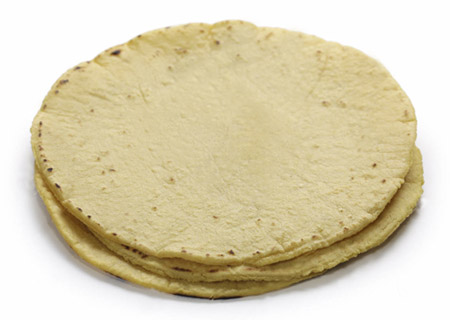
| The produce market, notice the corn in the foreground. Pinterest |
Perhaps you find a stall that serves the Aztec chocolate drink Xocolatl, a cool and unknown treat in the new world. A sip and you’re hooked, but how do you get more, the Aztecs won’t take your money. A small sewing kit will do, the steel needle is an absolute wonder to the trading Aztec, he can use it for an excellent trade with the textile workers. Whatever you do, don’t try to cheat your way to an unfair deal; guards stand watch in the markets and spend their day bringing feuding parties to special judges who resolved marketplace conflict. After a long day exploring the unique goods of the New World maybe you’ll want to stop at one of the many restaurants and grab a full-service meal, a great way to get your first ever taste of turkey.
Whatever you do, don’t try to cheat your way to an unfair deal; guards stand watch in the markets and spend their day bringing feuding parties to special judges who resolved marketplace conflict. After a long day exploring the unique goods of the New World maybe you’ll want to stop at one of the many restaurants and grab a full-service meal, a great way to get your first ever taste of turkey.
On your way back to your temporary palace room you might walk past a wedding ceremony. The Aztecs had elaborate ceremonies similar to Europeans, with a courtship that involved a dowry as well. Though the Aztec men could have multiple wives, it was only their first wife who held the higher status and she could get a divorce at any time.
 |
| a bit stylized, but this captures the spectacle and importance of the Spanish arrival. Pinterest |
The Spaniards Arrival: Preparing for War and Getting a Luxurious Welcome
Perhaps you arrive at the palace and find a collection of armored Spaniards arriving, looking comically out of place in their metal plates among lightly and brightly dressed natives. These Spaniards are getting a warm welcome, though they might look immensely uncomfortable; they had fully prepared to take the city by force and were armed for battle that day.
An impeccably dressed Montezuma is working through a translator to welcome Cortes and his men. Though the higher class knew that Cortes was no God, rumors of strange deities floated among the hundreds of thousands in the city. A sizeable crowd would surely have been gathered not too far away to see this group of strange men and horses.
 |
| Conquistadors entering Tenochtitlan. Wikipedia |
Only a few days later the city would be in utter chaos as Cortes and his men decided to kidnap the emperor. Being a foreigner, this would have made your future uncertain as well. A thick tension hung over the city as life continued on as normal as possible. After a while, you think it’s safe to go to the great festival of Toxcatl, after all, the Spaniards forbid sacrifice, so it should be a calmer affair without all the death.
Well, that might have been a mistake. The high-strung Spaniards, fearing a revolt, get a little too jumpy and start killing the nobles and priests at the banquet. Thousands of Aztecs are slaughtered, helpless against Spanish steel. a few thousand unarmed civilians at a feast was easy enough, but now a full revolt was coming. Holding up with the Spanish might still be the best of a plethora of bad options, at least the risk of being a sacrifice was much lower with them.
The Night of Sorrows: Spaniards Driven out, but they Left their Smallpox Behind
When Montezuma is killed, it’s definitely time to get out of there. Montezuma was killed by a mob of his own people while trying to speak for peace, but the prevailing rumor was that the Spanish did the deed. A night escape was necessary. As you gather up your belongings in the barricaded palace you put on as much borrowed armor you can and just pack the essentials. You might be shocked to see Spaniards preparing to leave not by loading up on armor, but sacks of gold, fastening pieces to themselves and slinging great bags of treasure over their shoulders.
 |
| Elite Aztec warriors. Pinterest |
The escape is frantic and terrible. The famous Eagle warriors, so impressive in their ceremonial duties around the temple, are now equally terrifying as they swarm around you. The Spanish armor holds, few men are dying, but one-by-one men are tackled and dragged off into the night. Fires illuminate the Temple Mayor in the distance as all of the city, Cortes, and his men witness the hasty sacrifices of the captured Spanish.
You spend your time in the middle of the pack, dodging spears thrown with the deadly atlatl, a device that could accelerate spears to almost 100 mph. the obsidian-edged wooden clubs can’t crack the armor, but most of the men soon sport large gashes in unprotected areas. Even Cortes was badly wounded that night.
 |
| The sad night. Wikipedia |
In their haste to get off the causeway, many men try to shove through or tiptoe the edge, several men fall in the lake and are literally drowned by their own greed as the bags of treasure pull them to the bottom. A full night of relentless attacks continues, canoe warriors pepper the retreating position with spears and each small island connected to the causeway is full of the elite warriors of the empire.
Finally, you break through to dry land, several thousand men were killed in the retreat but you’re alive and the Spaniards have allies nearby. You look forward to sleep and perhaps some of that excellent Xocolatl chocolate drink to celebrate mere survival. As you take one last look at the impressive city glowing in the moonlight, you see the fires of the great temple as you just make out the distant screams of the Aztec’s last Spanish sacrifices.
Written by